How to Read Surf Conditions
The four things that actually tell you whether it's worth paddling out — explained without the jargon.
Most beginners check the surf forecast and see a wall of numbers — 1.2m at 10s, offshore at 15 knots — and have no idea what any of it means. This guide changes that.
You only need to understand four things: swell height, swell period, wind direction, and tide. Get those right and you'll know, before you drive to the beach, whether it's going to be good, messy, or flat.
Swell Height
Swell height is the measurement that most beginners focus on — and it's the one they most often misread. The number in a forecast (say, 1.5m) refers to the height of the swell in open water, not the height of the wave on the beach. The actual breaking wave will typically be taller, sometimes significantly so depending on the shape of the seafloor.
As a general guide: a 1m swell produces knee-to-waist high waves. 1.5m gives you waist to chest high surf. 2m is overhead or close to it. Above 2m, waves are large and powerful — not beginner conditions.
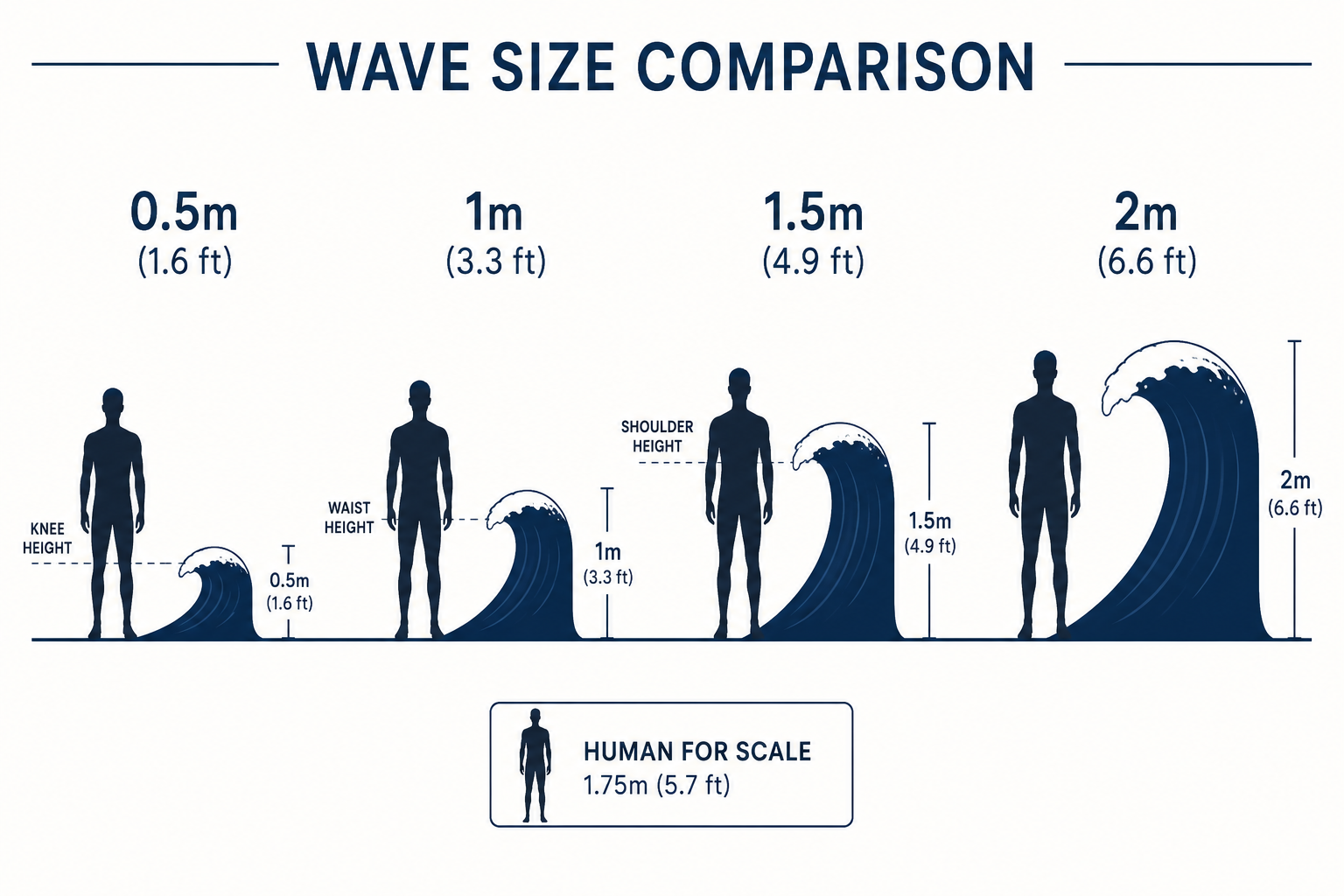
| Swell Height | Wave Face (approx) | For Beginners |
|---|---|---|
| 0.3 – 0.6m | Ankle to knee high | Very gentle — almost too small |
| 0.6 – 1.0m | Knee to waist high | Ideal beginner conditions |
| 1.0 – 1.5m | Waist to chest high | Manageable with some experience |
| 1.5 – 2.0m | Chest to overhead | Not recommended for beginners |
| 2.0m+ | Overhead and above | Experienced surfers only |
What to look for: For your first sessions, aim for 0.6–1.0m swell. Small enough to feel manageable, big enough to actually catch and ride.
Swell Period
Swell period is measured in seconds and tells you how far apart the waves are. A 10-second period means a new wave arrives every 10 seconds. This single number tells you more about wave quality than swell height does.
Short-period swell (under 8 seconds) is usually locally generated wind chop — messy, choppy, hard to surf. Long-period swell (12 seconds and above) has travelled hundreds or thousands of kilometres, which means it's organised, powerful, and clean. Long-period swell produces the best surf.
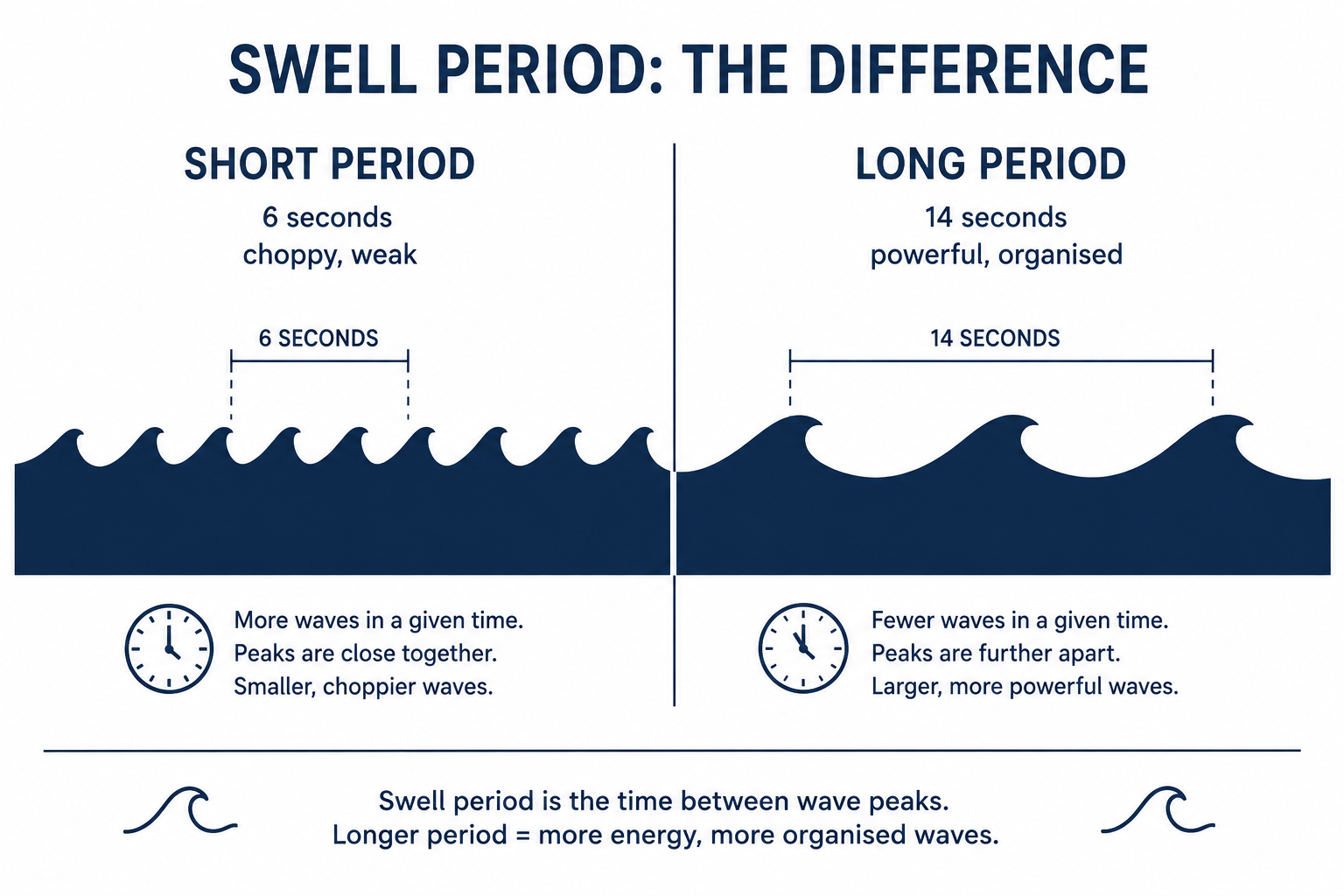
| Swell Period | Wave Type | Quality |
|---|---|---|
| Under 7s | Wind chop | Messy, hard to surf |
| 7 – 10s | Mixed swell | Passable, some shape |
| 10 – 14s | Groundswell | Good — clean organised waves |
| 14s+ | Long-period groundswell | Excellent — powerful and clean |
What to look for: Always read swell height and period together. 1.5m at 7s is usually worse than 1.0m at 14s. The period is the quality check.
Wind Direction
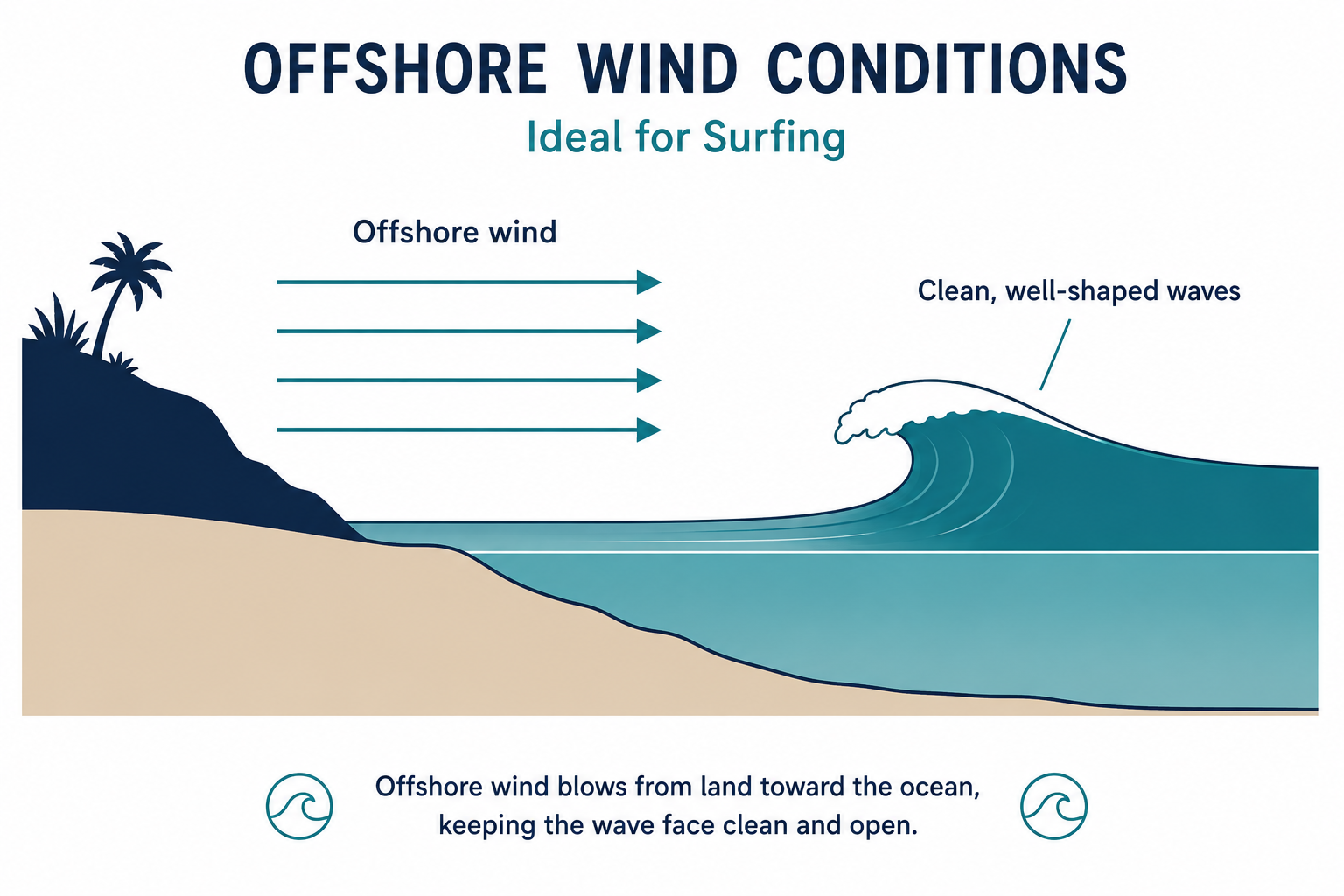
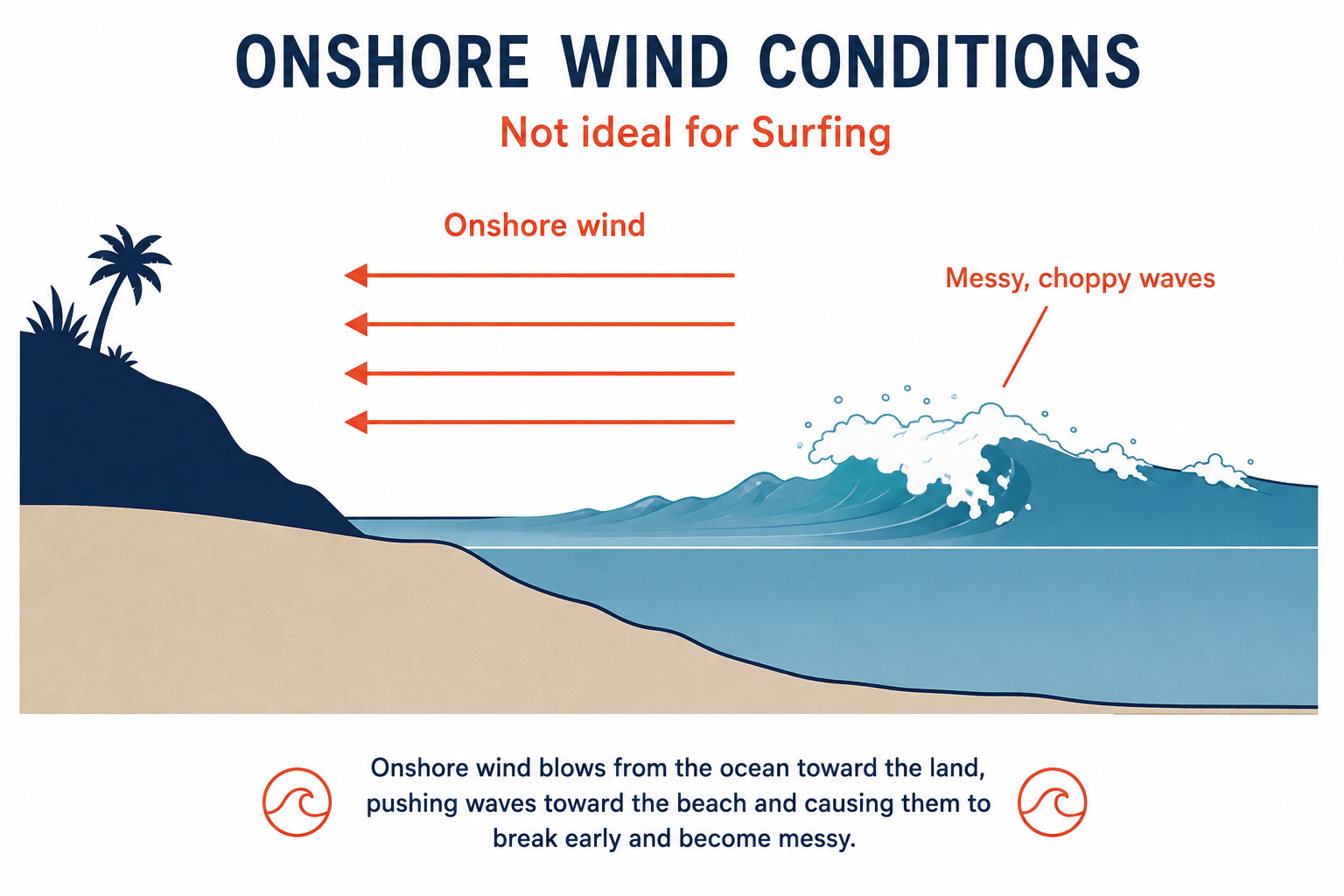
Wind is the variable that can make or break a surf session — even with good swell. There are two wind conditions that matter: offshore and onshore. Offshore wind blows from land to sea, into the face of the waves. Onshore wind blows from sea to land, pushing into the back of the waves.
Offshore wind holds up the wave face and creates clean, glassy conditions — the kind you see in photos. Onshore wind knocks the top off waves and creates choppy, disorganised surf. Light onshore can still be surfable, especially at beach breaks, but strong onshore makes conditions significantly harder.
What to look for: Check which direction the wind is blowing relative to the beach you're going to. Offshore at one beach might be onshore at a beach facing a different direction five kilometres away. Always match wind direction to the specific break.
Tide
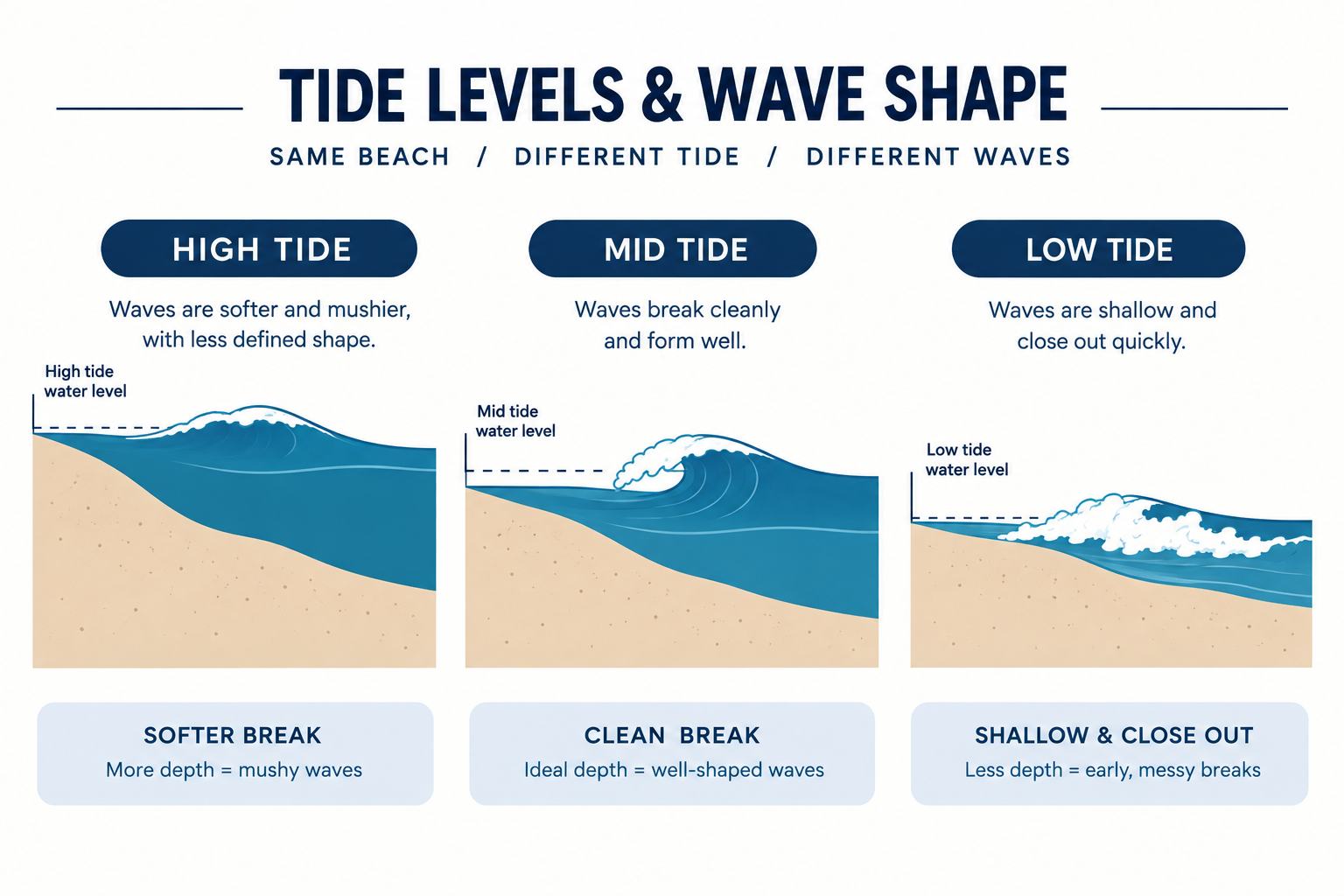
Tide refers to the rise and fall of sea level over the course of the day. Most coastlines experience two high tides and two low tides every 24 hours. The water level changes the depth over the sandbars and reef, which directly affects how waves break.
Different surf spots work best at different tides. A beach break might be best at mid-tide, when there's enough water over the sandbar but not so much that the waves become soft and slow. A reef break might close out at low tide (too shallow) and become excellent at high tide. There's no universal rule — it depends entirely on the specific spot.
| Tide State | Typical Effect |
|---|---|
| Low tide | Waves break harder and shorter — can be powerful or shallow |
| Mid tide (rising or falling) | Often the most consistent window at many beach breaks |
| High tide | Waves may become soft and slow, or close out depending on the spot |
What to look for: Ask a local surf shop or instructor what tide works best at your spot. Once you know, you can plan sessions around the tide window — usually a 2-hour window either side of the ideal level.
Putting it all together
Once you understand the four variables, reading a forecast becomes fast. Here's a simple checklist to run through before any session:
| Check | What you want |
|---|---|
| Swell height | 0.6–1.0m for beginners, up to 1.5m with experience |
| Swell period | 10 seconds or more for clean waves |
| Wind direction | Offshore, or light winds |
| Wind strength | Under 15 knots ideally |
| Tide | Whatever works at your specific spot |
Free apps to check: Windy and Windguru give you all four in one view. For swell forecasts specifically, Surfline is the most detailed option — their free tier covers most spots adequately.
No forecast replaces checking the beach in person. Drive past before you suit up. If it looks wrong, trust your eyes over the app.
Read the full guide free
Enter your name and email to unlock the rest of the guide and get a download link sent to you.
Ready to go deeper?
A personalised surf blueprint breaks down conditions windows, spots, gear and skill progression for your specific location and level.
Build your blueprint — $29 →